If you own a private aircraft in New Zealand, you already know the drill. You’ve either got it parked under a shared roof at the local aero club, sitting outside exposed to the elements, or you’ve been quietly thinking about building something on your own land for the last few years.
The third option is more achievable than most people assume — and the Waiau project is a good example of what that can look like in practice.
The Reality of NZ Weather on Aircraft
New Zealand’s climate is genuinely hard on aircraft. Coastal salt air, UV radiation, wind-driven rain, and temperature swings are facts of life whether you’re based in Northland, on the Canterbury Plains, or in the lower South Island. An aircraft sitting outside ages faster, corrodes faster, and requires more frequent maintenance than one that lives in a controlled environment.
A well-built hangar doesn’t just protect the airframe. It protects the avionics, the upholstery, the engine and your annual maintenance bill.
Kitset vs. Custom: What the Waiau Build Taught Us
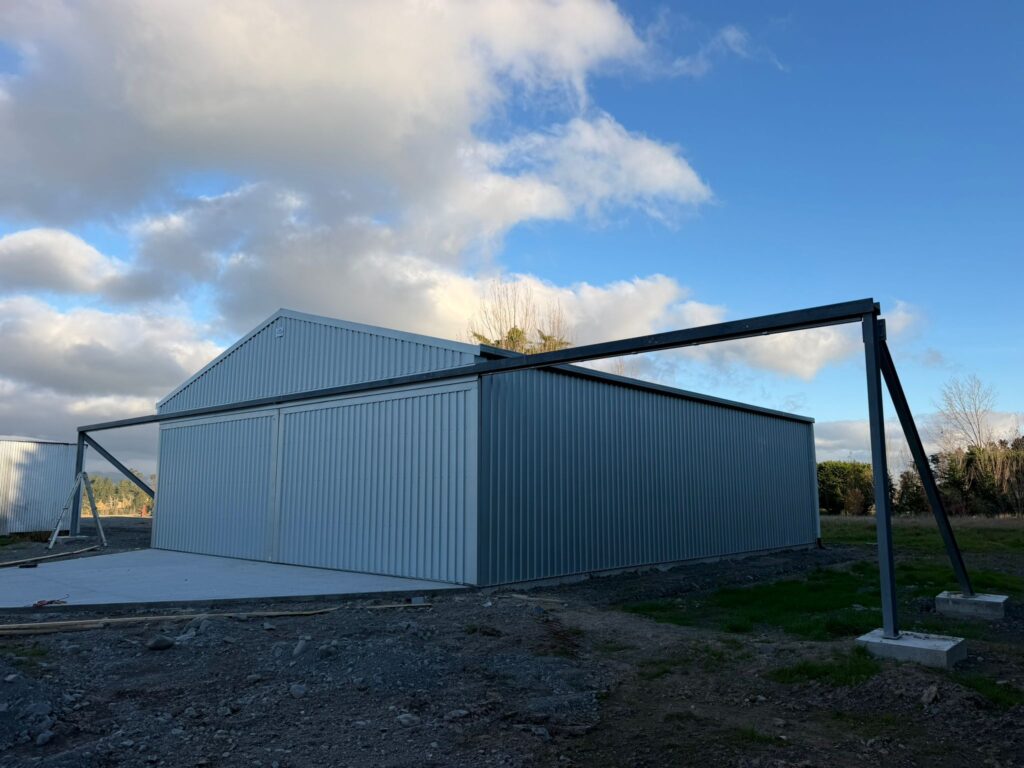
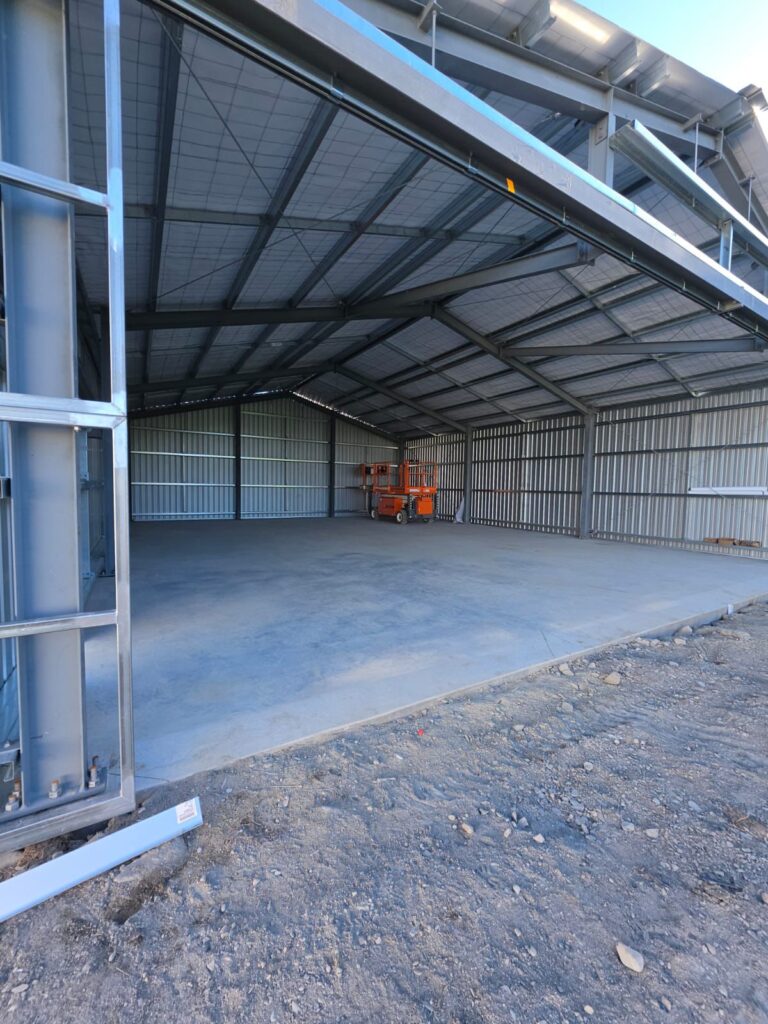
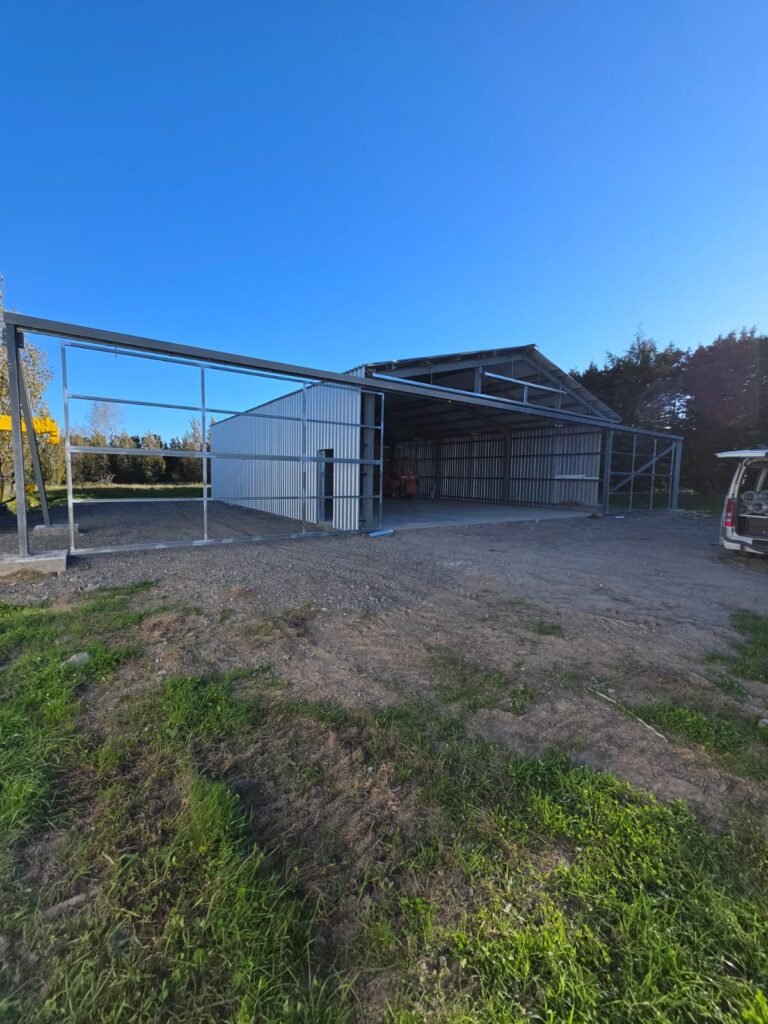
The Waiau hangar started as a kitset project, a 12 x 15m structure from ProSteel’s Titan range. But as the client worked through their requirements, it became clear that a straight kitset wasn’t going to be the right fit. The site, the aircraft, and the way the owner intended to use the space called for a custom hot rolled steel solution with bi-parting doors that gave us a 11.5m clear opening for his Microlight.
That transition from kitset to custom isn’t unusual. A kitset gives you a solid starting point and a known cost but custom fabrication opens up options around door sizing, internal clearances, and structural load requirements that a standard kit won’t always accommodate.
Hot rolled steel was the right call here. It’s stronger and better suited to larger spans and heavier structural loads than cold rolled alternatives. For a private hangar where you want it to last 30+ years with minimal maintenance, that matters.
What to Think About Before You Build
If you’re considering a private hangar, here are the practical questions worth working through early:
- Aircraft size now, and in five years. If there’s any chance you’ll upgrade to a larger aircraft, build for it now.
- Door type and width. Bi-fold hydraulic, sliding, or swing doors each have trade-offs around cost, wind loading, and ease of use.
- Workshop space. A hangar that doubles as a maintenance workshop needs adequate lighting, drainage, and power: plan this in from day one.
- Council consent and CAA requirements. If you’re on a private airstrip or adjacent to an aerodrome, there are specific compliance steps involved. It’s not complicated, but it needs to be done in the right order.
- Steel specification. Hot rolled vs. cold rolled affects span capability, longevity, and cost. For larger private hangars, hot rolled is generally the stronger choice.
The Cost of Not Having a Hangar
It’s easy to defer the decision. Aero club fees are manageable. The aircraft looks fine. The build feels like a big project.
But the real cost of open storage accumulates quietly: in repaints, in seal replacements, in avionics that degrade faster than they should, and in the time you spend cleaning and inspecting an aircraft that’s been sitting in the rain. Private hangars tend to pay for themselves over a longer time horizon than people expect, and they add genuine value to rural property.
The Waiau project is a reminder that the jump from ‘thinking about it’ to ‘done’ is usually smaller than it looks from the outside.